








Most accounts payable teams already have controls in place. Invoices are reviewed, approvals are completed, and payments are processed through established workflows. Yet even well-managed AP operations can leave money on the table.
Duplicate payments, incorrect pricing, missed credits, and supplier billing errors can remain hidden across millions of transactions. The problem becomes even harder to manage when a company operates across several ERP systems, business units, and supplier networks. This is where an accounts payable recovery audit can uncover value that routine AP controls may miss.
But finding recovery opportunities quickly does not happen by simply running a large set of audit tests. A strong program needs the right data, intelligent analysis, and a process for turning findings into actual recovery.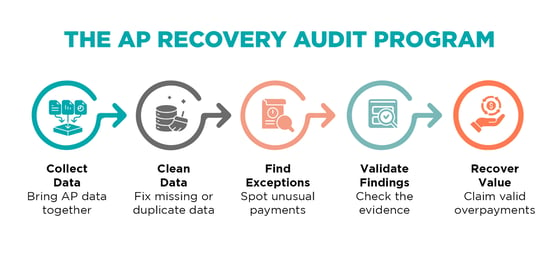
Start with the Right Data
The first step is knowing what you are actually auditing. An AP recovery program should bring together the data needed to understand the full payment picture. Depending on the organization, this may include:
- Invoice records
- Payment history
- Vendor master data
- Purchase orders
- Credit memos
- Contract and pricing information
- Goods receipt records
- Rebate and discount details
The challenge is that this information is often spread across different systems. A supplier may have one record in one ERP and another record in a different business unit. Invoice information may also follow different formats.
Clean the Data Before Looking for Errors
Good recovery depends on good data. Before searching for duplicate payments or pricing issues, teams need to address inconsistencies that can hide relationships between transactions.
Supplier names are a common example. The same company could appear as:
- ABC Technologies
- ABC Tech Solutions
- ABC Technologies Ltd.
A basic system may treat these as three different suppliers. Data cleansing can help standardize supplier records, remove duplicate entries, correct missing information, and connect related transactions. This gives the audit team a clearer view of what was actually paid and to whom.
Move from Simple Matches to Hidden Patterns
Traditional AP checks often look for obvious duplicates, such as the same supplier, invoice number, and amount. That can find some errors. But enterprise payment data is rarely that simple.
A supplier may submit the same invoice with a slightly different reference number. A duplicate payment may move through two different business units. An invoice may have a different format but still represent the same underlying transaction. This is why a strong recovery program should look beyond exact matches.
The analysis can examine factors such as:
- Similar invoice amounts
- Supplier relationships
- Payment dates
- Invoice descriptions
- Repeated transaction patterns
- Pricing differences
- Contract changes
- Duplicate supplier records
Validate Before You Claim
Not every unusual transaction is an error. A payment may appear to be a duplicate but may relate to a different service. A pricing difference may be explained by a valid contract amendment. A credit may already have been applied through another transaction, and that is why potential findings need to be validated before a recovery claim is made.
The validation process may include reviewing:
- Original invoices
- Payment records
- Contracts
- Purchase orders
- Credit documentation
- Supplier correspondence
- Internal approvals
Use Every Recovery to Improve AP
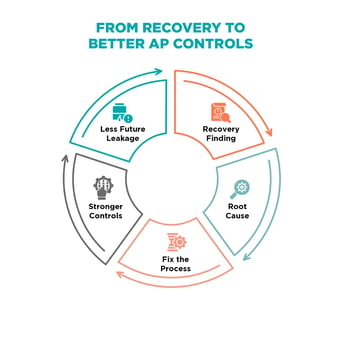
A recovered payment tells you more than how much money was lost. It can also show where the process broke down.
If duplicate payments repeatedly involve the same supplier records, vendor master controls may need attention. If pricing errors appear after contract changes, communication between procurement and AP may need improvement.
If errors occur during ERP migrations, data validation may need to be strengthened. This makes recovery audits useful beyond the immediate financial return. The strongest programs use audit findings to improve controls, reduce repeat errors, and protect future payments.
Find the Value Hidden in Your AP Data
An effective accounts payable recovery audit should do more than identify what went wrong. It should help finance teams understand where leakage is occurring, recover valid claims, and strengthen the processes that led to those issues.
Discover Dollar combines data-driven analysis with audit expertise to help organizations examine complex AP environments, uncover missed recovery opportunities, and turn findings into measurable action. If you suspect your AP data may contain missing values, request a recovery audit to find out what your payment history may be hiding.