








Retailers face countless challenges that impact profitability. One of the most crucial is revenue leakage due to overlooked discounts, pricing errors, and vendor discrepancies. Identifying and addressing these potential losses effectively requires the expertise of the best Retail Merchandise Recovery Audit Provider.
Choosing the right partner can greatly enhance your financial performance by recovering lost revenue, improving operational efficiency, and optimizing vendor relationships. However, the selection process demands a clear understanding of key factors, including the provider's industry expertise, technological capabilities, and proven success rates.
This blog will guide you through the essential considerations for choosing the best Retail Merchandise Recovery Audit solutions, from evaluating their performance metrics to understanding the return on investment (ROI) they offer. With the right audit provider, your business can ensure sustained profitability and remain competitive in an increasingly challenging retail landscape.
Key Factors to Consider When Choosing the Best Retail Merchandise Recovery Audit Provider
Choosing the best Retail Merchandise Recovery Audit Provider can profoundly affect your business, especially when it comes to improving financial performance and operational efficiency. Here are the essential factors to consider when selecting the right provider:
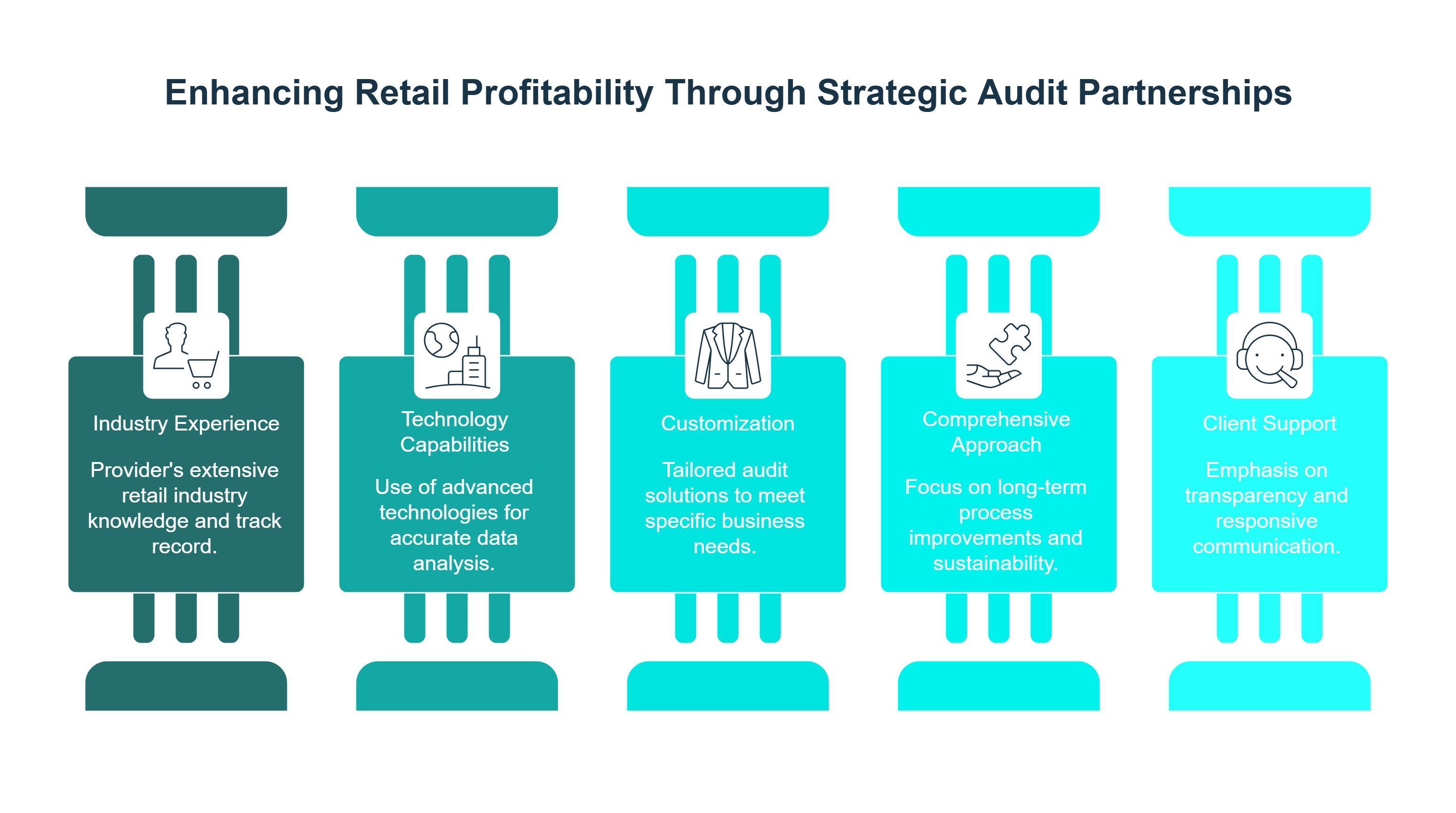
1. Industry Experience and Expertise
It's crucial to partner with a provider that has extensive experience in the retail industry. An audit provider who understands the intricacies of retail operations, from vendor relationships to pricing errors, will offer more tailored and effective solutions. The best Retail Merchandise Recovery Audit Providers have a track record of working with retailers like yours and recovering significant amounts of lost revenue.
2. Technology and Data Capabilities
Advanced technological capabilities are a must in today's complex retail environment. The best Retail Merchandise Recovery Audit Solutions use cutting-edge technologies like AI, machine learning, and data analytics to quickly and accurately detect discrepancies. Providers who can manage large datasets and run deep, real-time analyses are better positioned to identify missed vendor rebates, overcharges, and pricing errors that can slip through manual audits.
3. Customization and Flexibility
Your business is unique, and so are your audit needs. The provider you choose should offer customized solutions tailored to your specific goals and requirements. A flexible provider can adapt their services to focus on the most critical areas for your business, whether it's contract compliance, vendor management, or discount recovery.
4. Comprehensive Audit Approach
Look for a provider that not only focuses on recovering lost revenue but also helps enhance your internal processes. Their audit solutions should go beyond identifying discrepancies by uncovering the root causes of financial leaks. The best providers will offer actionable recommendations for long-term process improvements. This comprehensive approach ensures sustainable profitability and long-lasting financial health, rather than merely providing one-time recoveries.
5. Client Support and Transparency
A great Retail Merchandise Recovery Audit Provider prioritizes transparency and client communication. They should offer frequent updates and detailed reports on audit progress, findings, and recovery efforts. Responsive client support is also critical, ensuring that any concerns are promptly addressed and that the audit runs smoothly from start to finish.
How to Evaluate the Success Rate and Results of Audit Solutions
When selecting the best Retail Merchandise Recovery Audit provider, one of the most crucial steps is evaluating their success rate and the tangible results they can deliver. While many audit providers will claim to be able to recover lost revenue, the true value of their services is best reflected through measurable outcomes.
1. Review Case Studies and Testimonials
The most effective way to assess the success rate of an audit provider is by reviewing case studies and client testimonials. A strong track record of successfully identifying revenue leaks and implementing actionable improvements is a clear indicator of a provider's capabilities. Look for real-world examples where the provider has delivered significant savings for businesses of similar size or industry.
2. Understand the Metrics and KPIs Used by the Provider
A professional and experienced Retail Merchandise Recovery Audit provider will measure their success using concrete Key Performance Indicators (KPIs). These may include:
- Recovery Rate: The percentage of lost revenue or discrepancies identified and recovered.
- Accuracy of Findings: The ability to correctly identify issues without false positives.
- Client Satisfaction: Positive feedback from clients, especially about the provider's transparency and communication during the audit process.
Make sure the provider clearly outlines the metrics they use to evaluate their performance and how they will track success for your business.
3. Look for Continuous Improvement in Their Audit Process
The best audit providers do not rely on a one-time audit approach. They continuously refine their methods to adapt to changing market conditions and technological advancements. Providers who invest in new tools, technology, and training for their teams will offer more precise and up-to-date solutions, ensuring a higher success rate.
4. Benchmark Results Against Industry Standards
Some of the top Retail Merchandise Recovery Audit providers will be able to compare their results against industry standards. This comparison is especially helpful in setting realistic expectations for your own business. If a provider claims that they are recovering "industry-leading" amounts of revenue but cannot back it up with data, it may be a red flag.
Example: If an audit provider reports a recovery rate of 12% but the average industry recovery rate is 5%, this is an excellent indicator of their capabilities.
5. Ask About Long-Term Impact Beyond Immediate Recovery
While immediate recoveries are important, the value of an audit extends beyond the money recovered. A truly successful audit should lead to long-term improvements in internal processes, vendor relationships, and overall efficiency. Ask the provider how they track and measure the long-term impact of their solutions on your bottom line.
Cost vs. Value: Determining ROI of the Best Retail Merchandise Recovery Audit Provider
When choosing a Retail Merchandise Recovery Audit Provider, cost is an important factor. However, the real question is whether the value you receive justifies the cost. A high-quality audit provider should not just focus on recovering funds but should also offer significant operational improvements that drive long-term value. Here's how you can evaluate the cost vs. value when selecting the right audit provider:
1. Understand the Provider's Fee Structure
It's essential to understand how the provider charges for their services. Some audit providers work on a contingency fee basis, meaning they only get paid if they recover lost funds, while others might charge a fixed fee or hourly rate. The contingency fee model can be appealing since there's little financial risk upfront, but it's crucial to ensure that the provider's rates are reasonable and in line with industry standards.
2. Analyze the Total Value Beyond Recovery
A lower-cost provider may seem appealing, but if they are unable to identify critical discrepancies or recover a substantial amount of funds, the cost will not provide sufficient value. On the other hand, providers with a slightly higher cost may offer advanced solutions, deeper audits, and a greater ability to address long-term systemic issues.
Consider:
- How effective is the provider in identifying not only direct recoveries but also areas of potential operational inefficiencies?
- Do they provide actionable insights for improving internal processes, vendor relationships, and financial management?
3. ROI Beyond Financial Recovery
While financial recovery is vital, a good provider should also help you improve operational efficiency, reduce errors, and strengthen vendor partnerships. The best Retail Merchandise Recovery Audit Providers don't only focus on immediate recoveries; they drive improvements that continue to save your business money over time.
For instance, an audit might reveal opportunities to renegotiate vendor contracts, update pricing policies, or automate aspects of your inventory management, all of which contribute to long-term savings.
4. Consider the Scalability of the Provider's Solutions
As your business grows, you'll need an audit provider who can scale their solutions to meet your evolving needs. A provider that offers scalable solutions ensures that your ROI remains strong as your business expands, with adjustments made as your business complexities increase.
Top Questions to Ask Before Hiring a Best Retail Merchandise Recovery Audit Provider
When hiring a Retail Merchandise Recovery Audit provider, it's essential to ask the right questions to ensure the provider aligns with your business goals and can deliver the expected results. Here are some key questions to consider during your evaluation:
1. What is your track record for recovery success?
Understanding the provider's historical success rate with similar businesses can give you insights into their ability to recover funds. Look for providers that have a proven record of uncovering missed opportunities and generating a high return on investment (ROI).
2. How do you tailor audit solutions to meet specific business needs?
The best providers should customize their audit approach based on your unique business model. Ask how they assess your company's needs, and if they provide personalized strategies for recovering lost revenue and improving operational efficiency.
3. What tools and technologies do you use in your audits?
Inquire about the technological tools the provider uses to streamline the audit process. Providers who leverage advanced technologies can analyze large datasets more efficiently, uncovering discrepancies that might go unnoticed through traditional methods.
4. How do you ensure transparency and communication throughout the process?
It's important to know how the provider plans to keep you informed. Regular updates, detailed reports, and clear communication channels help ensure that all findings and corrective actions are well understood and acted upon on time.
5. What are the costs associated with your services, and how do you structure pricing?
Be sure to get a clear understanding of the pricing structure, including any hidden fees or performance-based costs. You want to ensure that the provider offers value for money, aligning their fees with the recovery results they deliver.
6. What is your approach to post-audit support?
The best audit providers not only conduct audits but also offer post-audit support. Ask how they help businesses implement corrective actions, track improvements, and ensure that audit-related issues don't reoccur.
By asking these important questions, you can gain a clearer picture of the provider's capabilities, their suitability for your business, and how they can contribute to your overall profitability and efficiency.
Conclusion
Choosing the best Retail Merchandise Recovery Audit provider is a critical decision that can directly impact your bottom line. By considering key factors such as the provider's industry experience, technological capabilities, and success rate, you can ensure that the audit solutions align with your business needs. Moreover, understanding the value they bring in terms of cost, ROI, and post-audit support will ensure that your partnership recovers lost revenue and also strengthens your operational processes.
When selecting a provider, focus on their ability to deliver long-term results, customize their approach to your unique challenges, and offer clear, transparent communication throughout the audit process. With the right partner, your business will be well-equipped to optimize recovery opportunities, minimize revenue leaks, and build a foundation for sustained growth and profitability.