








For CFOs, enhancing financial performance usually boils down to two aspects: growing revenue and
reducing expenses. Both require constant work and a long-term plan.
But a crucial aspect is often left unnoticed - recovering money that has been lost through the current
processes.
In many companies, accounts payable is seen as a regular process. Invoices are accepted, checked, and
then paid. The process appears to be controlled and efficient.
However, within this process, certain issues may be overlooked, like multiple invoices and pricing
mistakes in discounts, misplaced discounts, and unclaimed credits.
How much of this is actually getting monitored and recovered?
What is an Accounts Payable Recovery Audit?
An accounts payable recovery audit is a formal review of previous transactions. The purpose of the audit
is to discover and repair:
- Duplicate payments
- Overpayments
- Pricing discrepancies
- Missed vendor credits
This procedure goes beyond fixing mistakes. It safeguards the cash flow and ensures the company's
payments are valid and legal.
Why CFOs are Focusing on Recovery Audits
Audits of recovery are becoming more important for CFOs. This CFO guide exists precisely because:
- Profit margins are in decline
- The volume of transactions continues to increase
- Vendor networks are getting more complicated
In this type of situation, even a small number of payment errors could cause massive financial loss.
Where Financial Leakage Commonly Happens
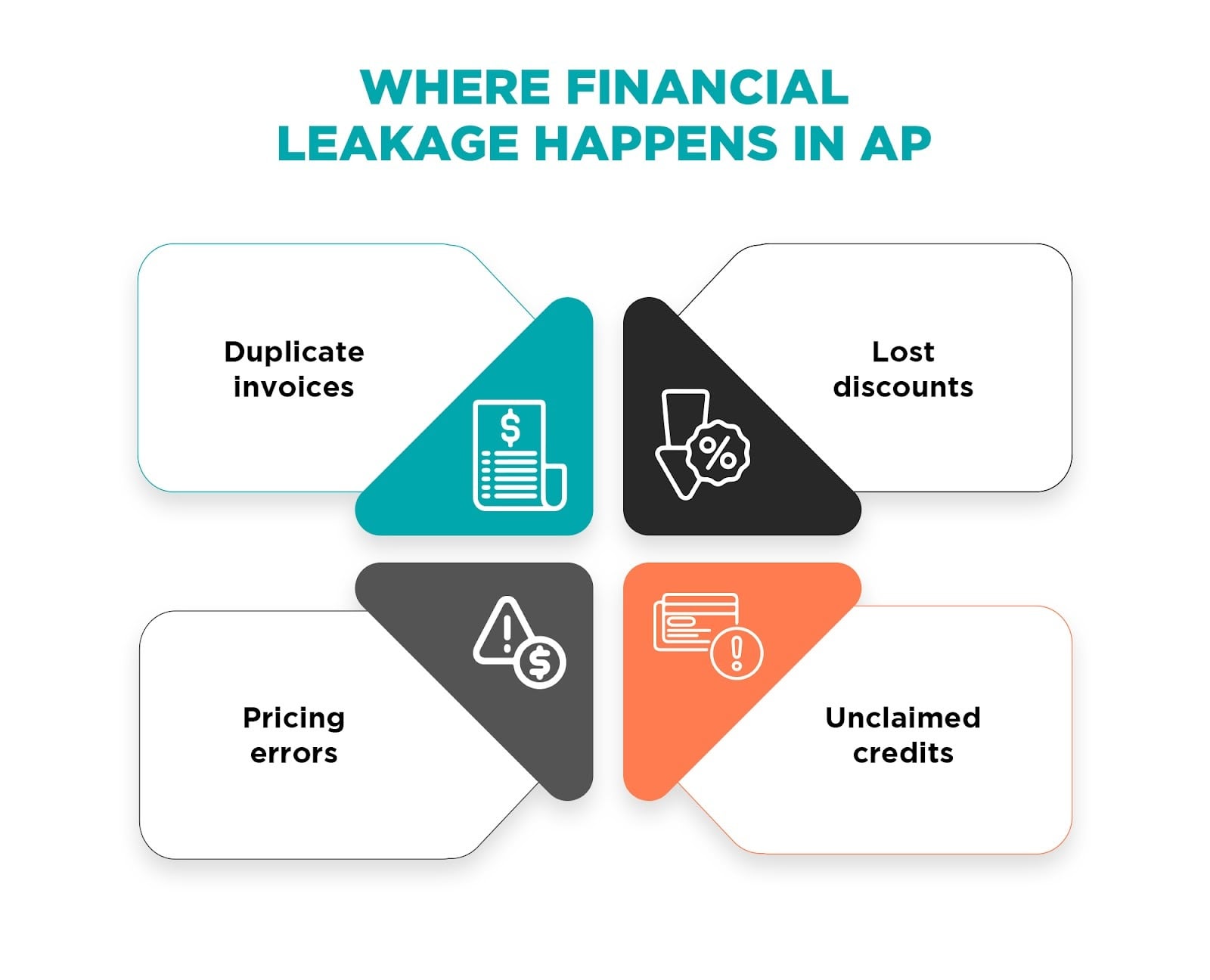
The leakage of funds in accounts payables isn't always apparent. It can be found during routine
transactions.
Common areas are:
Duplicate Invoices
- There are slight differences in invoice numbers
- Formats can differ across systems.
- Manual data entry errors
Lost Discounts
- Discounts for early payments are not applicable
- Inadvertent contractual incentives
Pricing Discrepancies
- Incorrect pricing was applied
- The contract terms differ from the actual bill
Unclaimed Credits
- Returns are not properly adjusted
- Credits issued by vendors are not monitored
- Corrections to the billing are not included in the bill
On their own, these issues could appear to be minor. However, over time, they can have a profound financial impact.
The Limitations of Traditional Approaches
A majority of organizations depend on internal checks, ERP validations, and periodic audits to monitor accounts payable.
While they are essential, they are not without limitations:
- They concentrate more on process conformity than on the accuracy of their financial statements.
- They might miss more complex or repetitive patterns
- They are unable to provide a clear picture of the ongoing issues
Essential Elements of a Successful Recovery Audit
A well-planned accounts payable recovery audit must extend beyond the simple checks.
The most important elements are:
- Analysis of the complete transaction data instead of a sample
- Validation across a variety of platforms and sources of data
- Checking the contract's terms in relation to actual payment
- Monitoring continuously to detect early warning signs
The most important thing is that the audit should provide an accurate understanding of the amount realized in relation to the costs of the audit.
Measuring Recuperation ROI: Success
For CFOs, the efficiency of a recovery audit can be evaluated by returns on investments (ROI). The main issue is not the amount of money that was recouped, however, but if the amount was worth the expense. The benchmarks for industry typically indicate the possibility of a return of 4x-10x on investment in audits. When the return is much lower, it could indicate deficiencies in the audit scope, method, or execution.
Fixed Fee vs. Performance-Based Models
The pricing model used for recovery audits plays a significant part in the decision-making process.
Fixed Fee Model
- Requires upfront payment
- Cannot guarantee recovery outcomes
Performance-Based Model
- Payments are linked to the actual recovery
- Reduces financial risk
- Incentives are aligned with outcomes
As any practical CFO guide will affirm, the performance-based model tends to offer greater accountability and more measurable value, which is why many finance leaders prefer it.
A Move towards Continuous Recovery
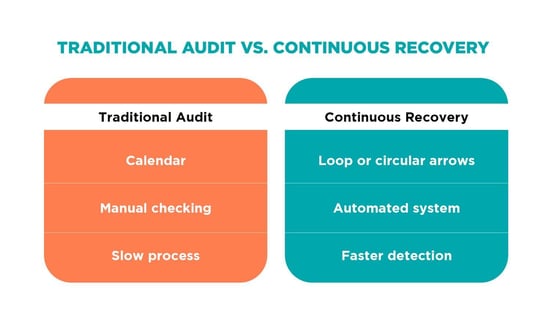
There's a noticeable change in the way organizations conduct recovery audits.
Traditional method:
- Periodic audits
- Inadequate identification of issues
Continuous Recovery:
- Constant monitoring
- Rapider detection and faster recovery
This helps decrease accumulated losses, enhance visibility, and improve financial management in the long run.
Final Thoughts
Audits for recovery of accounts payable have grown into a vital instrument for controlling financials.
They can provide:
- Recovering value directly
- Improved visibility into the financial process
- Greater accountability and better governance
The CFO's role presents an opportunity to improve their financial efficiency without increasing the complexity of operations. If your current strategy appears to be ineffective or reactive, it could be the right time to review the approach. Discover Dollar helps businesses run smart, performance-based recovery audits, identifying duplicate invoices, pricing errors, and missed credits that traditional processes routinely overlook. A quick assessment will help you identify any gaps or opportunities that could otherwise go unnoticed. In many instances, the quickest financial benefits are already in the system; they only need to be discovered.
Frequently Asked Questions
An accounts payable recovery audit reviews past transactions to identify and recover lost funds such as duplicate payments, pricing errors, and missed credits. It helps CFOs strengthen cash flow, improve financial accuracy, and ensure that payments made are valid, compliant, and aligned with contractual agreements.