







To guarantee correct reporting across progressively complex accounting activities, Chief Accounting Officers (CAOs) are constantly under pressure. Traditional auditing methods are still prone to mistakes, though. All too frequently, they start a blame game in which audit teams are forced to fix issues that should have been avoided sooner.
With the emergence of intelligent automation, this relationship is currently changing. Recovery audit systems driven by AI are able to anticipate and stop accounting errors in addition to detecting them. By doing this, they change accounting from a defensive role to one that actively influences business strategy and profitability.
The Consequences of Business as Usual
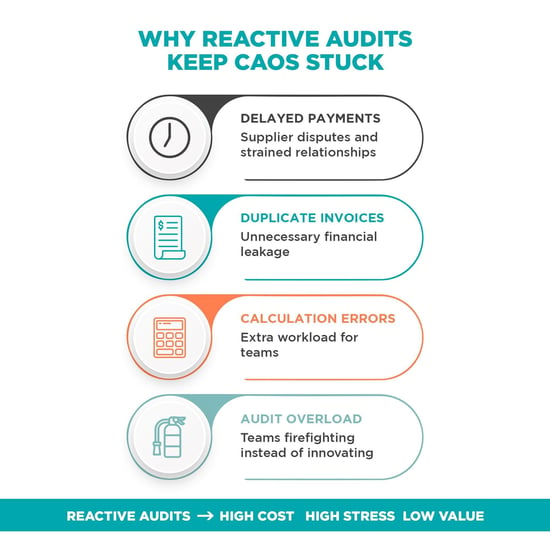
No CAO is immune to the frustration of discovering that discrepancies have gone unreconciled for weeks, or even months. What often begins as a small oversight—an invoice entered twice, a vendor payment delayed, or a calculation error overlooked—can quickly snowball into a series of interconnected problems.
When these issues are left unresolved, they drain valuable time and resources from finance teams that could otherwise focus on strategic work. They also damage supplier relationships, as delayed or inaccurate payments erode trust and create unnecessary friction. Over time, these seemingly minor errors can have destructive consequences, impacting cash flow, profitability, and the overall reputation of the finance function.
Conventional recovery audits frequently have the impression of damage control. They only intervene once issues have arisen, much like an emergency room. Over time, calculation errors, duplicate invoices, and late vendor payments add up to a series of financial blunders.
By the time the audit occurs, these problems have frequently gotten worse and will take a lot of work to resolve. Entire teams may be consumed by the recovery process, which takes attention away from strategic initiatives and leaves finance directors continuously responding rather than preventing.
The Proactive Revolution
The ability to recover lost data is a complete game-changer. Organizations don't solve problems; intelligent systems solve them before they arise. After systems learn and recognize your organization's payment standards, odd activities like unnecessary vendor inquiries and duplicate payments, amongst other things, become red flags.
These systems do not just identify and solve problems; they avert them. Using AI software, these systems can analyze historical data to identify gaps in the workflow, enabling controls to be placed before mistakes are made.
Strategic Leadership Through Prevention
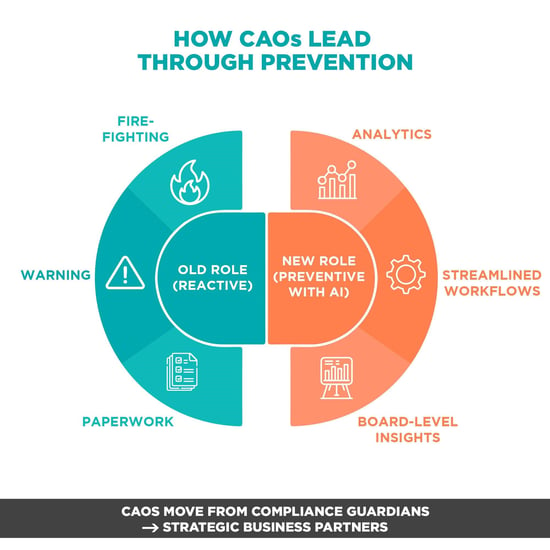
This change is not just operational; it is the removal of the old style of managing things for the CAOs. The teams are no longer "fire-fighting". Their energies go into strategizing initiatives to enhance business value.
AI powered recovery audit systems enable your experienced staff to focus on more strategic tasks, rather than the monotonous task of hunting for errors. They can now focus on analyzing trends, streamlining processes, and aiding in strategic business decisions, rather than spending hours on discrepancy investigations.
This improves your standing with the executive leadership as well. Instead of reacting to problems and reporting them after the fact, you can now offer insights on risk patterns and risk mitigation strategies to become a more strategic partner who preserves the financial integrity of the organization.
Implementation Success Factors
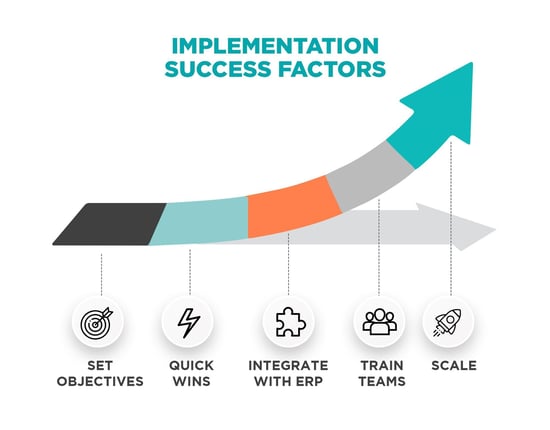
Most CAOs who achieve success have a defined set of objectives with a logical timeframe for the implementation of the AI solutions. Audit challenges such as duplicate payments, vendor master files, or systems approval workflows should be the first to address.
Ensure you select systems that work well with your existing ERP systems. AI powered recovery audit systems should complement existing systems and workflows rather than replacing them, as this will increase user approval and ease of implementation.
Training also needs to be provided to your staff as part of the implementation success. They should be familiar with the tools and know how to develop a strategy based on AI insights and predictive analytics.
Constructing the Finance Function Prepared for the Future
The accounting profession is changing quickly, and for the CAOs who adopt proactive technologies, they configure their organization for success for the years to come. For example, accounts payable automation driven by artificial intelligence is not solely an efficiency play. Instead, it helps construct financially operative systems that cope with varying business conditions.
AI recovery audits shift the expectation of stakeholders to a real-time view of an organization's financial performance and risk. After all, it aids quick, self-supporting decisions at all levels across the organization with constant appraisal and real-time insights.
Gaining a Competitive Advantage
Organizations with proactive audit capabilities gain a significant competitive edge and stronger vendor relationships by settling payments on time and with precision. They can reduce compliance risk through regular appraisals. Most importantly, they shift their focus from error rectification to growth.
The transformation under CAOs is proof of a leader with foresight. Financial precision is a secondary gain. Primary gain is the systems that are put in place as the organization is poised for growth.
Moving away from reactive measures towards prevention is what accounting leadership is about. Accounts payable automation combined with AI gives CAOs a powerful toolkit to achieve this transformation.
Final Words
At Discover Dollar, we understand the unique challenges Chief Accounting Officers (CAOs) face today in the world of omnipresent complexities in finance. This is why we have created an AI-powered recovery audit to help CAOs move one step ahead in problem-solving to make risk control a core part of the audit. You will retain the control to scale the recovery audit visibility and enable the CAOs to defend the organization's Cash Flow Forecast.
Imagine the impact of an organization's savings when CAOs adopt automation technologies to recover audits. We all know the significant benefits CAOs gain from such automation, which touches outer space.
Reach out to us to gain a clear and accelerated understanding of the Audit Recovery process. Our experts will walk you through the debt audit workflow, leveraging CAO logs for deeper insights. We'll guide you at every step and address all your questions to ensure you have the clarity and confidence to move forward.
FAQs
An AI-driven recovery audit recovers duplicate payments, overlooked credits, and compliance shortfalls by examining large sets of financial data. For accounting leaders, it not only recovers lost revenue but also lays the groundwork for proactive financial management through the uncovering of hidden inefficiencies and weaknesses in internal controls.